Duli to Baaji: Whose gaze shapes indigenous representation?
Let us go back to the 1970s and one of Satyajit Ray’s best-known films, Aranyer Din Ratri. The film follows four urban Bengali men who leave Calcutta for the forests of Palamau, seeking an escape from the anxieties, boredom and restrictions of middle-class city life. In the forest, they find a space where the conventions governing their everyday lives seem, at least temporarily, to loosen.
But there is a contradiction at the heart of this escape.
For the four Bengali men, the forest is somewhere to get away to. For the Indigenous people who live there, it is home. This distinction matters because the Santhal presence in the film is closely intertwined with the landscape through which the protagonists encounter a world different from their own. The Indigenous community becomes part of the setting against which the urban characters explore their desires, prejudices and contradictions.
Duli, a Santhal woman, occupies a particularly important place in this dynamic. She enters the story not simply as an individual but also through the desires and fantasies of the urban male characters. When Duli and other Santhal women arrive at the forest bungalow, they are hired to perform domestic work. As Duli works, the camera repeatedly draws attention to her body. The gaze of the urban Bengali man and, at moments, the gaze of the camera appear to overlap.
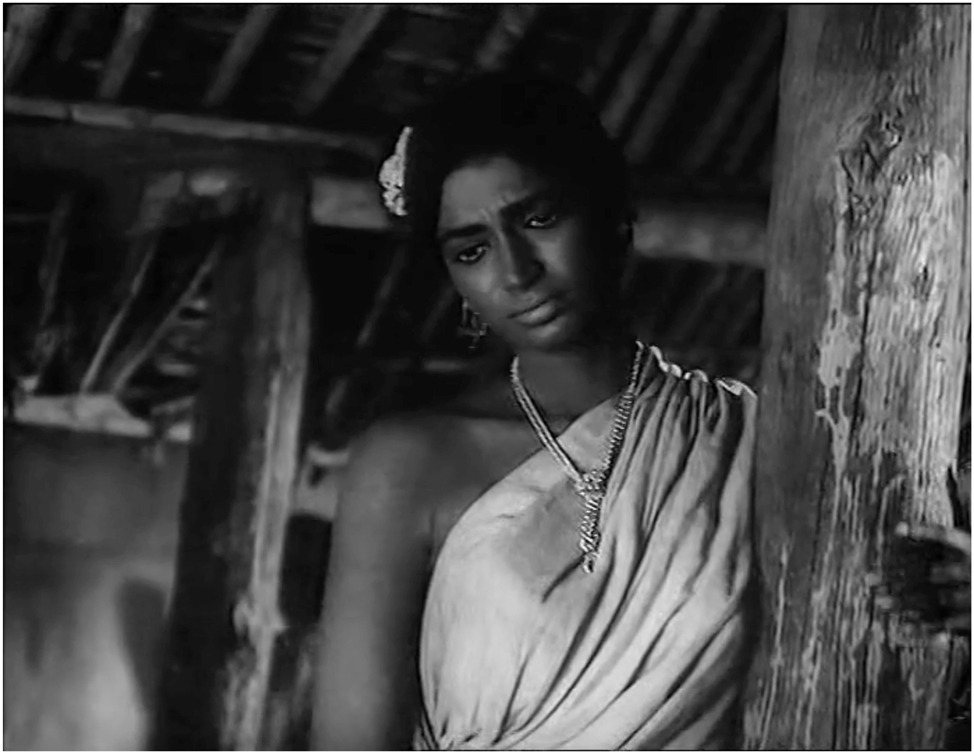
This creates an uncomfortable tension. Ray exposes the arrogance, hypocrisy and contradictions of his urban middle-class male characters. Yet the film can also be read as reproducing some of the very ways of looking at Indigenous people, particularly Indigenous women, that it appears to scrutinise.
The relationship between Hari and Duli makes this tension more visible. Near the end of the film, they become intimate in the forest, and Hari invites Duli to come to Kolkata. She is excited by the possibility that the city might offer better work and opportunities. Hari, who carries his own anxieties about urban modernity and Westernised culture, nevertheless assumes the position of the man who can offer Duli access to that supposedly modern world.
Ray is clearly interested in exposing the contradictions of urban Bengali culture. But Duli’s body and identity also become vehicles through which those contradictions are explored.
Ray is clearly interested in exposing the contradictions of urban Bengali culture. But Duli’s body and identity also become vehicles through which those contradictions are explored. This raises a larger question: when Indigenous women appear in mainstream Bengali culture, are they allowed to exist as complex individuals in their own right, or are they too often made to carry the fantasies, anxieties and contradictions of Bengali society?
This question extends far beyond Ray.
Anjan Dutt’s music and cinema, for instance, have repeatedly evoked Darjeeling and the hills of West Bengal. Across Bengali popular culture more broadly, the hills frequently appear as spaces of beauty and escape: green landscapes, mountains, mist, music and lifestyles that offer an imagined alternative to urban life. But what happens to the people who actually inhabit those landscapes?
Similar questions can be raised about the representation of indigenous characters across contemporary films and OTT productions. Their faces may be visible, but visibility by itself does not necessarily amount to meaningful representation. There is a persistent gap between how mainstream culture imagines indigenous communities and how those communities understand their own lives, identities and histories.
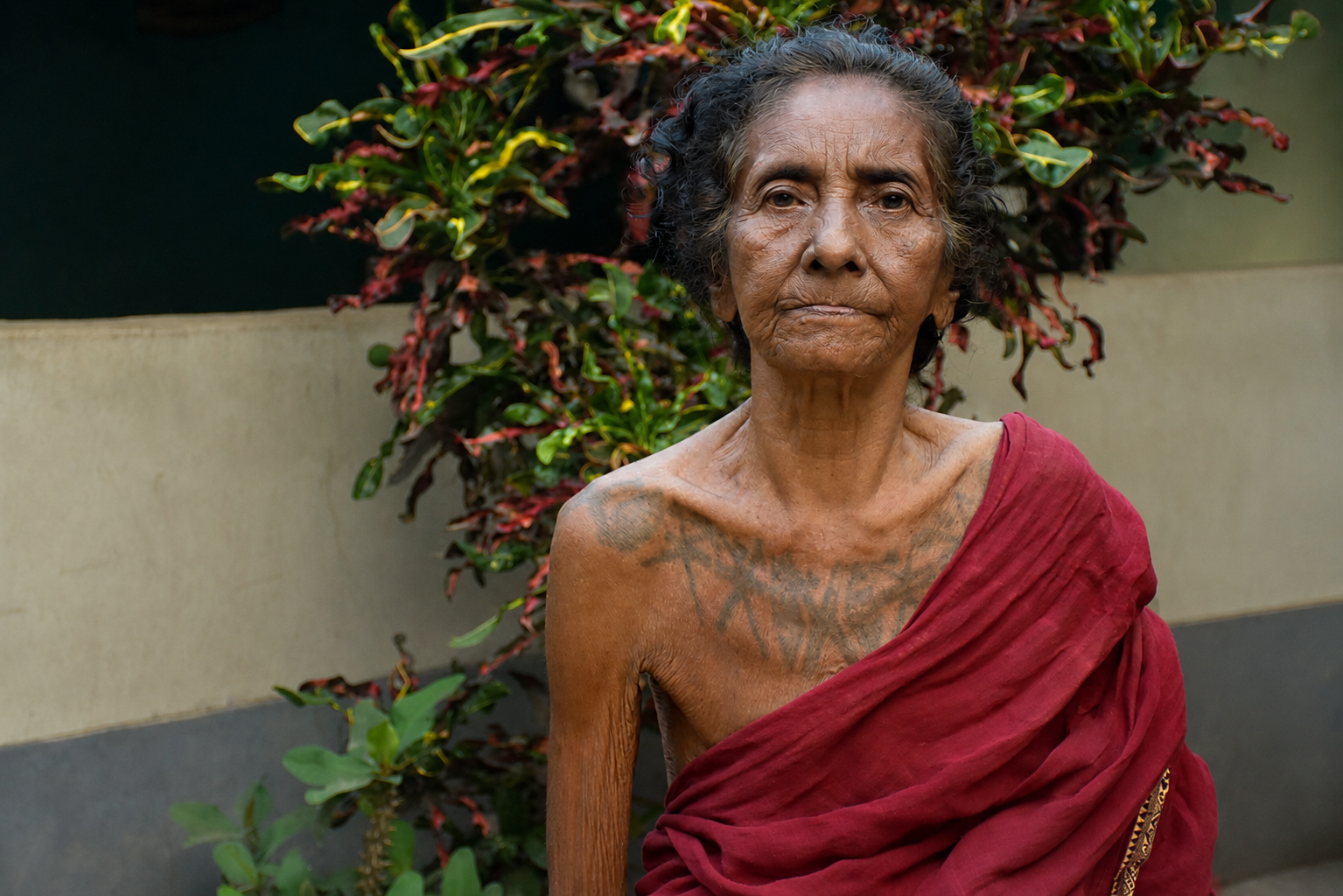
Recent Bangladeshi cinema raises similar questions. In Myself Allen Swapan, indigenous characters or actors appear in roles associated with activities such as drug smuggling and border crossing. In Rehana Maryam Noor, an indigenous girl appears briefly in a minor role, is given a Bengali name and is shown cheating in an examination.
No single character or film can establish a pattern on its own. But taken together, such portrayals invite us to ask why indigenous faces so often appear on the margins of mainstream narratives and why those appearances are being associated with criminality, deception or other negative characteristics.
The problem is no less complicated when we move from cinema to music, particularly when representations of indigenous women intersect with patriarchal ideas of sexuality.
Take Baaji from Coke Studio Bangla. The song draws on expressions familiar from adda and casual conversations among Bengali men. Part of its narrative involves a Bengali man travelling to the hills, becoming attracted to a Pahari woman and effectively betting that he can win her over. The woman and the hills consequently become intertwined within a familiar Bengali male fantasy.
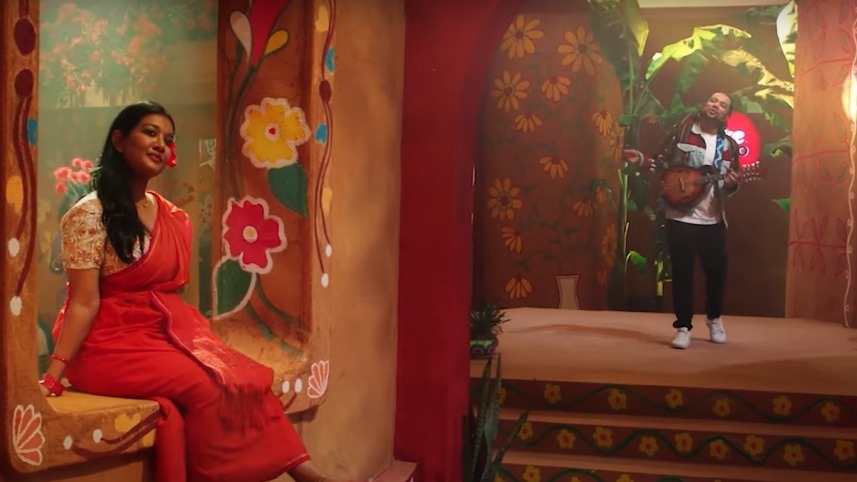
The issue is not simply that a Bengali man is attracted to a Pahari woman. Love, desire and relationships can cross ethnic and cultural boundaries. The question is what kind of agency the indigenous woman is given within that representation. Is she a person with a social world, culture and desires of her own, or does she primarily exist as the object of someone else’s adventure and attraction?
Baaji raises another question because the production incorporates cultural elements from different Indigenous communities. Marma music appears alongside the Bengali song, while Bawm traditional dance is also incorporated into the performance. But what is the relationship between these elements? Is there a lyrical or cultural connection between the Marma and Bengali components? How does the Bawm dance relate to the narrative and meaning of the song? Or have different indigenous traditions primarily been assembled to create an attractive aesthetic?
Cultural fusion can, of course, be creative and meaningful. But it becomes important to ask whether indigenous traditions are being engaged with on their own terms or being used as visual and musical elements within a production whose central perspective remains Bengali.
The contrast becomes clearer when we listen to music that approaches indigenous experiences differently. Sayan’s Aita Kalpana Chakmar Gaan, for example, engages with struggles experienced by indigenous communities over the years. Indigenous band Madal offers another perspective. Songs such as Prien Snal and Karnafulir Kanna articulate pain, struggle and emotional experiences from within indigenous worlds rather than treating those worlds merely as scenery.
This is not an argument against the artists’ musical knowledge or the directors’ filmmaking abilities. Nor is it an argument that indigenous characters should only be portrayed positively. That would produce another kind of stereotype. Indigenous characters, like Bengali characters, should be able to be flawed, complicated, sympathetic, unpleasant, heroic or ordinary.
The issue is one of agency and perspective.
If a story requires indigenous characters, why should their presence so frequently remain peripheral? If music draws upon <a href="https://www.thedailystar.net/slow-reads/focus/news/the-lost-khoda-art-santals-tattoos-identity-and-the-legacy-the-santal-hul-4211381">indigenous</a> women, landscapes and cultural traditions, why should the dominant perspective so often remain that of the Bengali outsider? And when indigenous women enter stories of love and desire, why are they so often approached through the expectations and fantasies of Bengali men rather than through their own perspectives?
If a story requires indigenous characters, why should their presence so frequently remain peripheral? If music draws upon indigenous women, landscapes and cultural traditions, why should the dominant perspective so often remain that of the Bengali outsider? And when indigenous women enter stories of love and desire, why are they so often approached through the expectations and fantasies of Bengali men rather than through their own perspectives?
Bengali culture itself contains examples of a different approach. In 1991, Ray made Agantuk, a film that questioned conventional assumptions about civilisation, modernity and so-called primitive societies. More recently, Coke Studio Bangla released Meghdol’s Mulluk, which engages explicitly with the history, pain and struggles of tea workers.
These examples demonstrate that mainstream culture can do more than simply display marginalised communities. It can create space for their histories, experiences and questions.
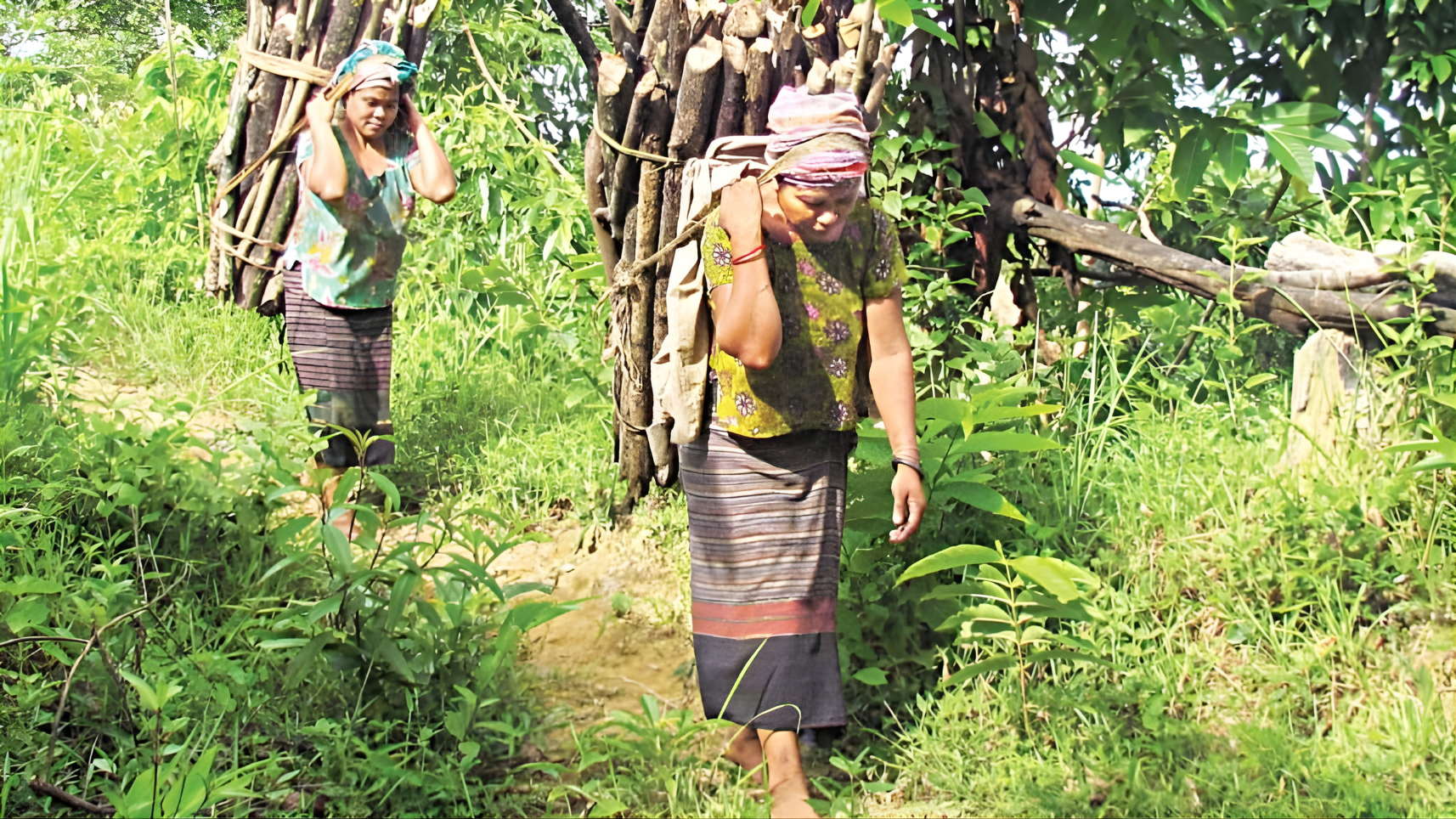
That possibility matters because Bengali music and cinema have enormous cultural influence across communities that share territories and social spaces with Bengali-speaking populations. Representation therefore cannot be dismissed as merely an artistic question. Who gets to tell a story, who is allowed to speak within it, and who remains merely an image in someone else’s narrative are also questions about cultural power.
Indigenous communities have long struggled against political and cultural marginalisation. Their histories, aspirations, conflicts, loves, humour, anger and everyday lives can all become part of Bengali music and cinema without reducing them to symbols of backwardness, criminality, exotic beauty or sexual fantasy.
Perhaps, then, the question is not whether Indigenous people should appear in Bengali music and cinema. They already do. The more important questions are: whose story are we telling, who gets to speak, and whose gaze are we using to tell it?
Prottoy Nafak is a fellow at Teach For Bangladesh. He can be reached at prottoy.nafak.22@gmail.com.
Send your articles for Slow Reads to slowreads@thedailystar.net. Check out our submission guidelines for details.

The everyday resistance of Rohingya women the world rarely sees

The banyan tree that became a restaurant for birds
What did we ask about Mariam while she was still alive?
Why Dhaka cannot simply ban the rickshaw
The elephants had to be rescued again. Where is the accountability?
‘Situation under control’, but at whose expense?
The untold side of Bangladesh's climate migration
Dhaka's unbearable heat: Who suffers the most?
Enforced disappearance in Bangladesh / Who investigates the state?