


Building an Integrated Agri-Finance Ecosystem Driven by Alternative Data
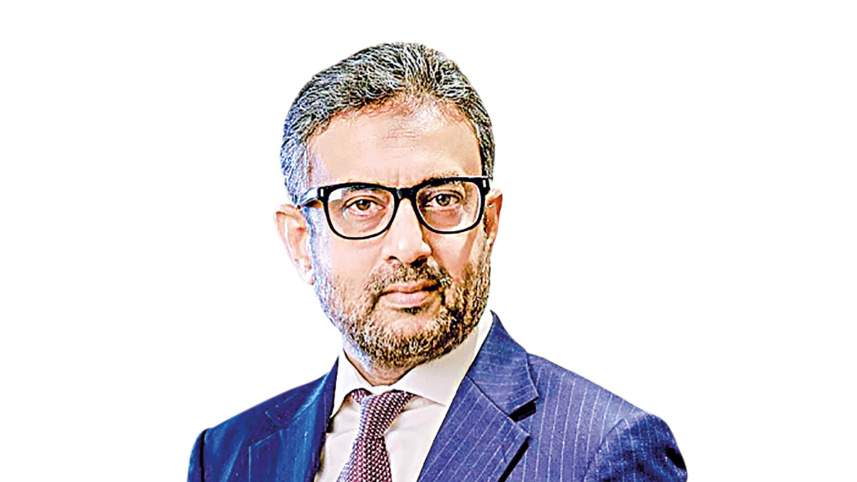
We must move from a ‘loan-and-recovery’ model to a ‘resilience-and-protection’ model, combining credit, crop insurance, guarantees, and climate-smart
technology.
Dhaka Bank PLC is advancing from transactional credit to constructing an integrated Agri-Finance Ecosystem blending digital underwriting, farm-data monitoring, and climate resilience. Md. Mostaque Ahmed, Deputy Managing Director and CEMO of Dhaka Bank PLC, outlines how alternative credit scoring, cluster financing, and bundled crop insurance transition agricultural lending into a prosperous business model.

The Daily Star (TDS): How has the agricultural financing landscape in Bangladesh evolved in recent years, and which emerging trends do you consider most significant?
Md. Mostaque Ahmed: Agricultural finance has shifted from crop-focused lending to a broader value-chain model. Key trends include annual disbursement expanding to Tk 42,834 crore in FY2025–26, diversification into livestock and mechanization, collateral-free credit, digital lending using alternative data, and risk management via crop insurance.
TDS: What changes are you seeing in the financing needs across the agricultural value chain?
MMA: Financing needs have shifted toward value-chain coverage—including tractors, harvesters, solar pumps, cold storage, warehouses, and processing units. Farmers and agribusinesses expect faster, digitally delivered loans aligned with cash flows.
TDS: How is Dhaka Bank adapting its agricultural finance products beyond crop production?
MMA: Dhaka Bank supports fisheries, dairy, livestock sheds, machinery, cold chains, agro-processing, transport, and aggregator working capital. Our goal is to strengthen cluster and value-chain financing through digital solutions, insurance partnerships, and credit guarantees.
TDS: Access to formal credit remains difficult for small farmers. What are the principal barriers, and how can banks address them?
MMA: Barriers include lack of land documentation, informal income, high transaction costs, and climate vulnerability. The rule must be ‘easier access, not easier credit.’ Banks should apply cash-flow assessment, alternative data, cluster financing, and credit guarantees.
TDS: How are agent banking, digital platforms, and new credit assessment methods changing access to finance?
MMA: They transition agri-finance from branch paper workflows to digital speed. Agent banking brings delivery to the field, while alternative data, satellite imagery, GPS mapping, and digital repayments optimize credit limits.
TDS: With agriculture exposed to climate and market risks, how should financing models evolve?
MMA: We must move from a ‘loan-and-recovery’ model to a ‘resilience-and-protection’ model. Dhaka Bank advocates a ‘Resilient Agriculture Finance Package’ combining Agri Loan + Insurance + Credit Guarantee + Climate-Smart Tech + Market Linkage.
TDS: What more can financial institutions do to support women, young agripreneurs, and small enterprises?
MMA: Institutions should offer dedicated cash-flow products, simplified onboarding, and tech training for young agripreneurs in smart farming and logistics. Funding a young woman agripreneur in dairy creates community employment.
TDS: Looking ahead, what policy support, institutional changes, or partnerships will be necessary?
MMA: We must transition from target-driven lending to a sustainable ecosystem featuring credit guarantees, crop insurance, digital farmer databases, warehouse infrastructure, and concessionary refinancing to shift agri-lending into a prosperity model.
 For all latest news, follow The Daily Star's Google News channel.
Comments