


Connecting finance from seed to shelf across the broader rural ecosystem
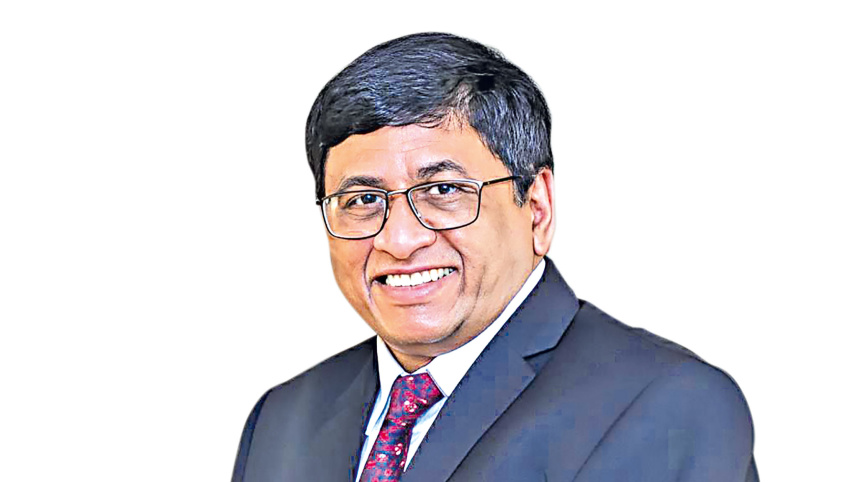
Our ambition should be to ensure that finance does not stop at the farm gate, but connects the entire chain from seed to production, processing, and the final market.
Bank Asia PLC bridges direct relationship banking with extensive indirect channel partnerships, facilitating over Tk 48,702 million in indirect agricultural credit to reach 1.08 million rural beneficiaries. Sohail R K Hussain, Managing Director of Bank Asia, emphasizes transitioning from financing isolated farmers to nurturing entire value-chain ecosystems from seed to shelf.

The Daily Star (TDS): How has the agricultural financing landscape in Bangladesh evolved in recent years, and which emerging trends do you consider most significant?
Sohail R K Hussain: Agricultural finance is moving beyond production toward a value-chain and enterprise-oriented model. Bangladesh Bank’s FY2026–27 credit target of Tk 60,000 crore—a 53.85% surge—underscores this shift. The most critical trend is transitioning from ‘financing a farmer’ to ‘financing an agricultural ecosystem’ connecting inputs, production, processing, logistics, and retail.

TDS: What changes are you seeing in the financing needs across the agricultural value chain?
SRKH: Demand has diversified into high-value crops, livestock, fisheries, cold chains, and processing working capital. Adopting a value-chain approach allows banks to assess credit based on the commercial ecosystem rather than evaluating the individual borrower in isolation.
TDS: How is Bank Asia adapting its agricultural finance products beyond crop production?
SRKH: Directly, Bank Asia has disbursed Tk 8,642.10 million to 130,653 rural customers covering crops (50.33%), livestock (Tk 2,649.50 million), fisheries (Tk 852.40 million), and machinery. Indirectly, we facilitated Tk 48,702.23 million reaching 1.08 million beneficiaries, scaling formal financial access across rural networks.
TDS: Access to formal credit remains difficult for many small farmers. What are the principal barriers, and how can financial institutions address them?
SRKH: Barriers include informal income, documentation gaps, and seasonal cash flows. Responsible inclusion means making finance simple and accessible via agent channels, e-KYC, and transaction data while maintaining sound KYC, field verification, and credit discipline.
TDS: How are agent banking, digital platforms, and new credit assessment methods changing rural finance?
SRKH: Agent banking and automated digital workflows simplify onboarding and cut delivery costs. Combining transaction-behavior analysis with field-level agricultural knowledge yields a powerful hybrid model: digital efficiency plus human relationship banking.
TDS: With agriculture exposed to climate and market risks, how should financing models evolve?
SRKH: Resilience must become a core component of credit quality. Banks should actively fund climate-smart irrigation, solar equipment, crop diversification, and insurance-linked loans, helping borrowers generate stable cash flows that protect portfolio quality.
TDS: What more can financial institutions do to support women, young agripreneurs, and small enterprises?
SRKH: Women and youth are emerging agricultural entrepreneurs in poultry, processing, and e-commerce. Through indirect programs, Bank Asia has reached over 87,000 women and young beneficiaries, driving local input demand, labor creation, and market supply.
TDS: Looking ahead, what policy support, institutional changes, or partnerships will be necessary?
SRKH: We need interoperable digital data infrastructure, expanded credit guarantees, agricultural insurance, and strong market linkages. Success should be measured by outreach, productivity, climate resilience, and value-chain development—connecting the entire economy from seed to shelf.
 For all latest news, follow The Daily Star's Google News channel.
Comments