


Digitizing the last mile and financing the whole ecosystem
If we get the policy framework, data infrastructure, and partnerships right, agricultural finance can move from a compliance obligation to one of the most commercially attractive segments in banking.
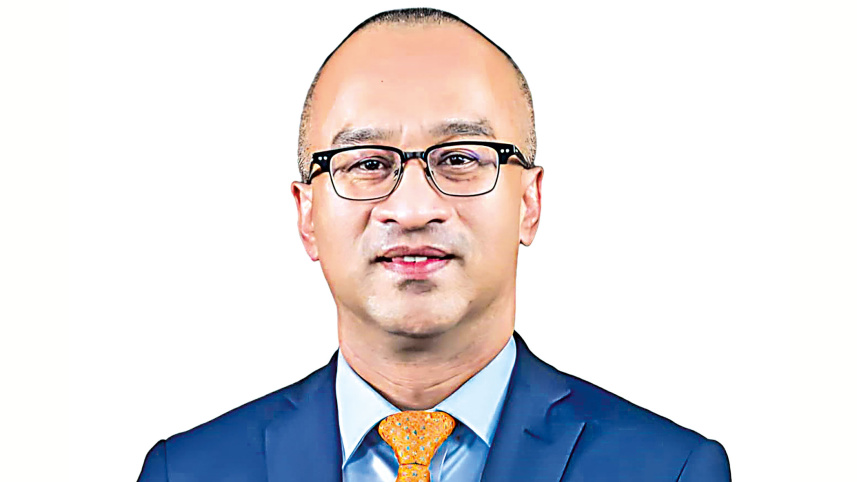
Agricultural finance in Bangladesh is moving rapidly beyond traditional seasonal crop lending toward an integrated ecosystem encompassing dairy, poultry, fisheries, mechanization, cold-chain logistics, and agro-processing. Mashrur Arefin, Managing Director & CEO of City Bank PLC, explains how agent banking, eKYC, and digital platforms are lowering the cost of last-mile delivery, enabling the bank to underwrite previously invisible rural entrepreneurs while advancing climate-resilient farming.

The Daily Star (TDS): How has the agricultural financing landscape in Bangladesh evolved in recent years, and which emerging trends do you consider most significant?
Mashrur Arefin: Agricultural finance in Bangladesh has moved well beyond the traditional, seasonal crop loan. A decade ago, most institutional lending was disbursed around staple crops and repaid at harvest. Today, we finance a wider agricultural economy that includes dairy, poultry, fisheries, horticulture, contract farming, cold-chain logistics, and agro-processing. Three trends stand out: first, digitization of the last mile through eKYC and Agent Banking; second, value chain financing where repayment is tied to traceable transactions across input suppliers, aggregators, and processors; and third, embedding sustainability into credit pricing and product design under central bank guidelines.

TDS: What changes are you seeing in the financing needs of farmers, agribusinesses, and other participants across the agricultural value chain?
MA: Borrowers no longer want generic financing; they need products shaped around their specific cash flows and production cycles. Smallholder farmers are seeking term loans for mechanization—like power tillers, shallow tube wells, and milking machines—to offset rising rural labor costs. Mid-stream agribusinesses like aggregators, feed millers, and hatcheries require working capital aligned with longer cash conversion cycles. Newer commercial entrants, including contract poultry and dairy operators, cooperatives, and agri-tech platforms, are requesting structured supply chain finance.
TDS: How is City Bank adapting its agricultural finance products to serve activities beyond crop production?
MA: Our Small, Microfinance, and Agent Banking networks were built deliberately to expand into dairy, livestock, fisheries, mechanization, and post-harvest infrastructure. A prime example is our Digital Dairy Financing Initiative with Milk Vita and Agroshift. Milk Vita connects thousands of registered dairy farmers, Agroshift provides digital onboarding and utilization tracking, and City Bank structures financing around actual milk collection cycles. We are replicating this template across fisheries and horticulture with partners like iFarmer, WeGro, and Syngenta.
TDS: Access to formal credit remains difficult for many small farmers. What are the principal barriers, and how can financial institutions address them responsibly?
MA: The key barriers are lack of land titles or acceptable collateral, thin credit histories, high distribution costs in remote char or haor areas, and seasonal income. These are not solved by lending more aggressively, but by lending differently. Agent banking and eKYC drastically reduce physical outreach costs. Partnering with cooperatives and agri-tech platforms provides verifiable transaction data as an alternative to conventional collateral, allowing us to extend credit responsibly without compromising underwriting standards.
TDS: How are agent banking, digital platforms, and new credit assessment methods changing rural financial access?
MA: This is where the real transformation is occurring. Agent banking provides an operational presence in remote areas without the capital expense of building branches, establishing regular banking habits among rural populations. Digital platforms allow us to onboard farmers via eKYC and evaluate creditworthiness using alternative transaction data rather than formal salary slips or land titles, bringing previously unbanked borrowers into the formal financial ecosystem.
TDS: With agriculture increasingly exposed to climate and market risks, how should financing models evolve to support sustainable practices?
MA: Climate risk must be explicitly underwritten rather than assumed away. We direct a growing share of our portfolio toward sustainable agriculture and CMSMEs, running into thousands of crore taka, and as a signatory to the Net-Zero Banking Alliance, we are committed to aligning our agricultural lending with net-zero goals. Closing the gap on affordable, scalable weather-index crop insurance remains a top industry priority.
TDS: What more can financial institutions do to support women, young agripreneurs, and small agricultural enterprises?
MA: Women and young entrepreneurs represent the future growth of agri-lending. City Bank addresses this through ‘City Alo,’ our dedicated women’s banking proposition offering simpler documentation, direct lending, and business literacy programs. For young agripreneurs, mechanization and digital platform-based financing offer high-leverage entry points that meet their comfort with digital channels.
TDS: Looking ahead, what policy support, institutional changes, or partnerships will be necessary to make agricultural finance commercially sustainable?
MA: Four priorities will make a material difference: expanding Bangladesh Bank’s credit guarantee and refinance schemes for mechanization, women, and fisheries; accelerating digital land records and movable asset registries; establishing public-private collaborations for affordable weather-index crop insurance; and fostering structured partnerships among banks, insurers, and tech platforms to make agri-finance a commercially attractive and impactful sector.
 For all latest news, follow The Daily Star's Google News channel.
Comments