


Empowering rural communities through shariah-compliant value-chain investments
Going forward, the real opportunity is to connect Shariah-compliant finance with productivity from seed to shelf, ensuring credit delivers higher farmer income and food security.
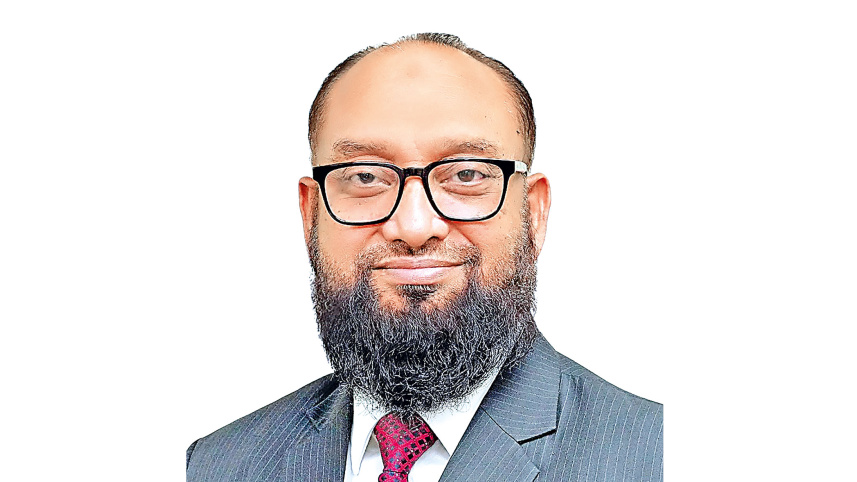
Islami Bank Bangladesh PLC is driving sustainable rural growth by anchoring agricultural credit in Shariah-compliant asset-backed and partnership modes. Md. Altaf Hossain, Managing Director (Acting) of Islami Bank, outlines how the Rural Development Scheme (RDS) delivers collateral-free micro-investment directly to rural doorsteps. connecting capital with productivity across Bangladesh’s agricultural value chain.

The Daily Star (TDS): How has the agricultural financing landscape in Bangladesh evolved in recent years, and which emerging trends do you consider most significant?
Md. Altaf Hossain: Agricultural financing in Bangladesh has shifted from traditional crop lending toward a broad value-chain model encompassing livestock, fisheries, machinery, storage, and processing. This evolution is supported by Bangladesh Bank raising its annual credit target from Tk 39,000 crore to Tk 60,000 crore for FY2026–27. At Islami Bank, we champion this shift through Shariah-compliant Agricultural Investment and RDS, delivering collateral-free doorstep investment to empower rural communities.
TDS: What changes are you seeing in the financing needs across the agricultural value chain?
MAH: Financing needs are increasingly value-chain oriented. Farmers require funding for mechanization, irrigation, and storage alongside inputs, while agribusinesses need working capital for procurement, processing, and distribution. We respond by offering tailored Shariah-compliant investment structures matched to seasonal cash flows.
TDS: How is Islami Bank adapting its products to serve activities beyond crop production?
MAH: We utilize asset-based modes like Bai-Murabaha and Bai-Muajjal alongside partnership modes like Musharaka and Mudaraba for fisheries, livestock, machinery, and storage. Designing investments around seasonal cash flows ensures every stage from production to market is supported responsibly.
TDS: Access to formal credit remains difficult for small farmers. What are the principal barriers, and how can banks address them?
MAH: Key barriers include insufficient collateral, limited documentation, low financial literacy, and distance. The solution is developing risk-assessment models that evaluate cash flows and productive capacity. RDS provides collateral-free financing and agent-assisted doorstep delivery to empower marginal farmers.
TDS: How are agent banking and digital platforms changing rural credit access?
MAH: Agent banking and digital channels bring financial services directly to rural doorsteps, eliminating travel costs and delays. Digital transaction histories enable transparent, Shariah-compliant asset-backed underwriting for underserved rural populations.
TDS: With agriculture exposed to climate and market risks, how should financing models evolve?
MAH: Financing must transition toward resilience-oriented investment supporting climate-smart irrigation, machinery, renewable energy, and storage. Shariah-compliant equity-sharing and Takaful (Islamic insurance) align naturally by distributing risk equitably across productive activities.
TDS: Looking ahead, what policy support, institutional changes, or partnerships will be necessary?
MAH: Bangladesh requires a stronger enabling ecosystem featuring expanded credit guarantees, targeted refinance facilities, Takaful insurance, and unified digital farmer databases. Collaboration between Bangladesh Bank, commercial banks, agribusinesses, and tech providers will ensure viable, Shariah-compliant finance that safeguards food security.
 For all latest news, follow The Daily Star's Google News channel.
Comments